One number to call
Paper wasps, hornets or yellow jackets: same line.
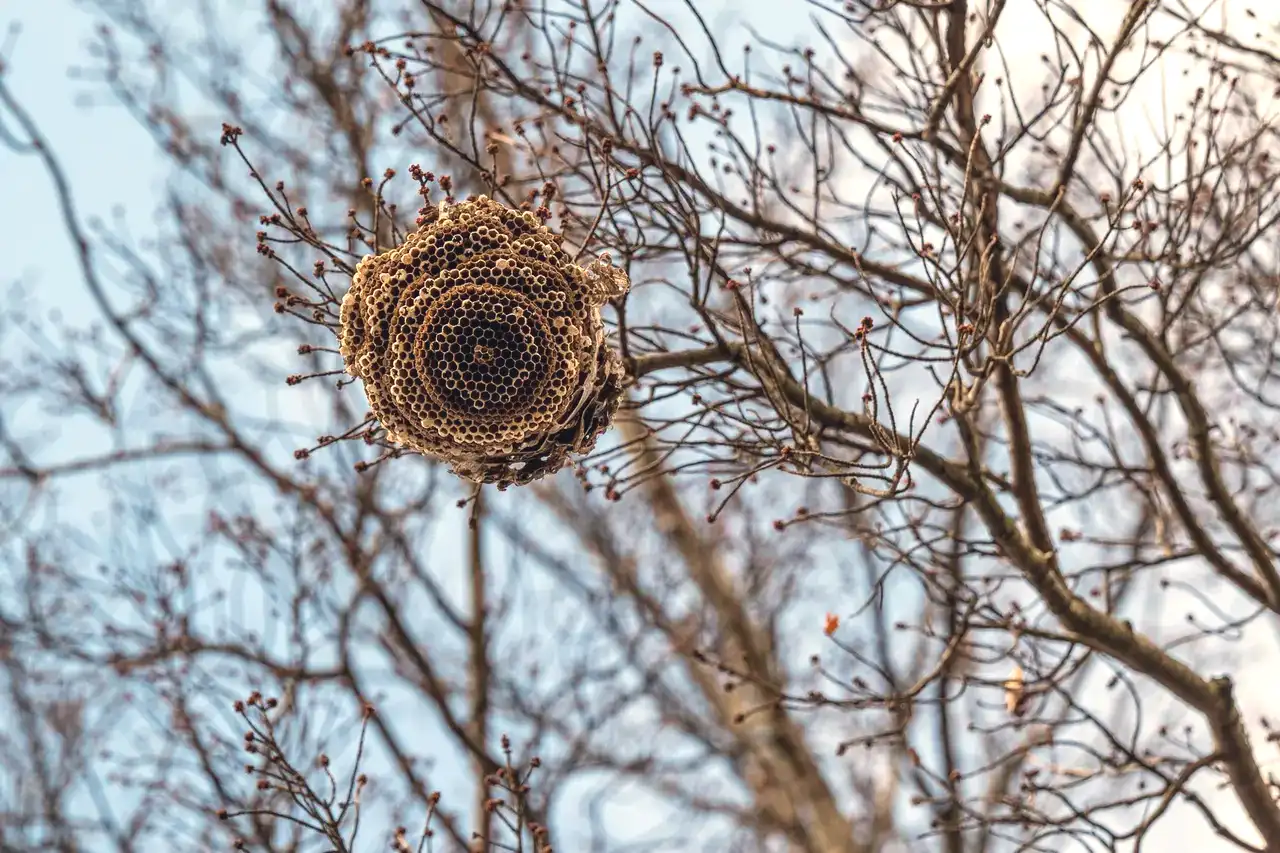
Wasp nest removal in Old Town, Lewisville, TX (75057). One call reaches an independent local provider for paper wasp, hornet or yellowjacket nests.
Paper wasps, hornets or yellow jackets: same line.
The provider confirms what is nesting before treating.
Routed to a provider that works in your ZIP code.
Look the company up on TDA’s license list.
A wasp nest over the front door or a yellowjacket hole beside the walk in Old Town is a reason to call before anyone gets stung. The City of Lewisville's history page describes Old Town as the city's first commercial center, and the area sits in ZIP 75057, a ZIP that the 2020 Census check places 98.2 percent inside Lewisville city limits. This site only connects calls; it is not a pest control company. Your call goes to an independent local company working in Lewisville, TX, including Old Town and nearby 75057 subdivisions such as Tanglewood, Heritage Square and Oakbrook on the Lake. Paper wasps hang open combs under eaves, yellowjackets mostly nest underground, and baldfaced hornets build enclosed paper nests. A provider usually starts by identifying the insect and locating the nest from a safe distance, then explains how it will be treated and taken down. Ask what happens if the wasps rebuild nearby next spring.
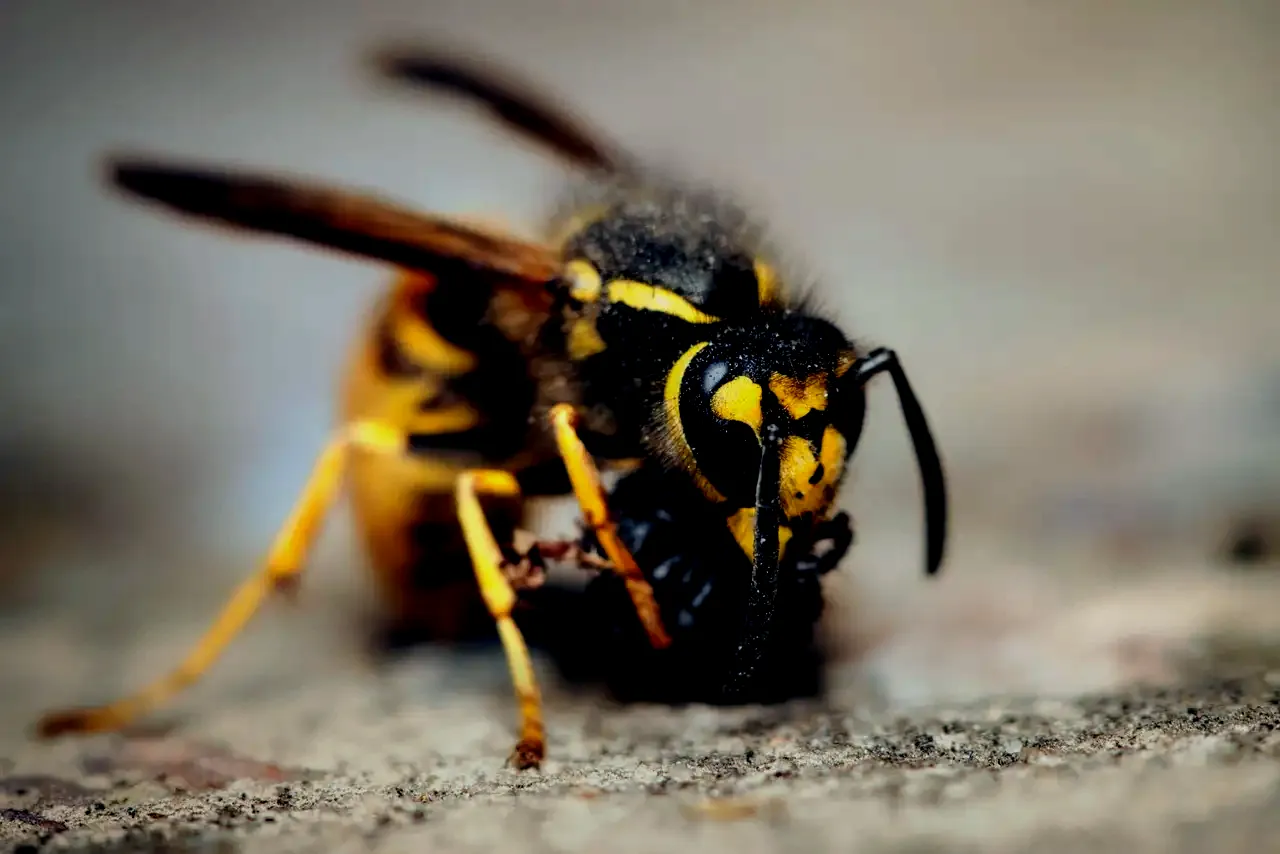
Wasp calls from Old Town follow the insects' calendar. Paper wasp queens start new nests in spring, and Texas A&M AgriLife says yellowjacket colonies reach their largest size by August or September. Lewisville providers commonly handle nest inspection, hornet and yellowjacket nests, apartment and HOA calls and return visits. Ring the referral line once and an independent provider can say which service matches the nest. The cards below show how each step usually goes in ZIP 75057.
A provider usually starts by working out what is flying: paper wasp, yellowjacket, baldfaced hornet, mud dauber or honey bee. Next come the nest's location and size, whether it hangs under an eave, sits in a shed or opens from the ground. Keep your distance; a photo taken from well back is enough. What the provider finds shapes the plan.
View service →02The baldfaced hornet is the only hornet known in Texas, and the Texas Apiary Inspection Service says it is actually a yellowjacket. It builds a large, enclosed gray paper nest in trees, shrubs or under eaves. A disturbed colony can sting many times over, so AgriLife advises leaving established hornet colonies to professionals. Ask the provider how the nest will be reached and when it can come down.
View service →03Yellowjacket nests are mostly underground, in lawns, beds and banks, though some hang in the open or fill a wall void. A provider treats the colony at its entrance and decides when the nest can be removed. Texas A&M AgriLife says a wall-void entrance generally should not be sealed until the colony has been eliminated, so leave that hole alone.
View service →04At Old Town apartments, townhomes and rentals, a nest on a balcony, breezeway or shared eave usually involves the landlord, manager or HOA as well as the tenant. Tenants report the nest; the manager arranges access to common areas and rooflines. A provider may check nearby eaves and balconies for more nests. Ask who should be there on the day.
View service →05A return visit shows whether the colony is gone and whether wasps are building again. Texas A&M AgriLife notes that paper wasp queens often start new nests in the same general location as the previous season's, so eaves, sheds and garages near the old spot deserve a second look. Any further work is the provider's call. Ask how many return visits the plan covers.
View service →A call to the referral line from Old Town reaches an independent local provider. Have your address or ZIP ready and describe the nest: where it is, roughly how big, how high off the ground, and whether anyone in the household is allergic to stings. Mention whether wasps are going into a hole in the ground or a gap in a wall. Timing, cost and method are decided by the provider, and nothing obliges you to go ahead. On the visit, a provider usually confirms the insect and finds every entrance before treating anything. Many providers prefer early morning or evening, when most of the colony is home, but the timing is theirs to set. A hanging nest is usually taken down once it is inactive and within reach. A ground or wall nest may be treated at the entrance and checked again later, and the opening is closed only after the colony is dead. If the nest is on a shared building, ask how the manager and neighbors will be told.
In buildings with many units, an eave or balcony nest above one door is a problem for the whole stairway. Two in five Lewisville housing units (40.0 percent) are in buildings of five or more, so plenty of nests turn up on property that no single tenant controls. A provider usually needs the manager or HOA to open up roof edges, breezeways and common areas. Tenants should report a nest in writing and say exactly where it hangs.
Paper wasps build under eaves but also in garages, sheds and shrubbery, and the Texas Apiary Inspection Service says their combs can grow to 6 to 8 inches across. Around Old Town and the rest of 75057, that makes a quick look under the shed roof, the play set and the fence rails worthwhile before children head outside. Yellowjackets nest mostly underground, where a mower or a bare foot can set them off. If you see steady traffic, mark the spot from a distance and call.
Texas A&M AgriLife says yellowjacket colonies reach their largest size by August or September, and new queens and males emerge in October and November. A ground nest nobody noticed in June can be much bigger by late summer. After the first hard frost, most yellowjacket nests die and are not used again. Until then, keep mowers and children away from any busy hole.
In Texas, the Department of Agriculture's Structural Pest Control Service licenses pest control businesses, certified applicators and technicians. Find the provider on TDA's current-license list and ask for the license number before work starts.
Ask the provider what will be applied near doors, play areas, pools and gardens, and how long to keep people and pets away. Mention anyone with a sting allergy in advance.
Most nests reported from Old Town are the kinds found anywhere in Lewisville: under eaves, in the lawn, inside walls or on shared balconies. Each card below explains how the problem usually appears and what a provider checks first.
Paper wasps hang open, umbrella-shaped combs under eaves, gutters, railings and door frames, and the Texas Apiary Inspection Service names eaves as their usual site. A comb by the front door means a sting risk every time someone walks out. Colonies are founded in spring and grow through the warm months. A provider usually treats the comb, takes it down once it is inactive and checks the rest of the roofline for more. Do not knock a nest down with a broom or a hose; it sends the colony into the air.
Yellowjacket nests are mostly underground, in lawns, flower beds and banks, with one small opening that is easy to miss. People usually find them with a mower, a string trimmer or a bare foot. The wasps are hairless and do not carry pollen, which helps tell them apart from honey bees. Mark the hole from a distance, keep children and pets inside, and let a provider handle it; AgriLife says established colonies are a job for professionals.
Where residents share breezeways, stairwells and balconies, one nest can sit above several front doors, and tenants often assume someone else has reported it. A nest in a common area is usually the manager's or HOA's to arrange, because the provider needs access to roof edges and shared spaces. Report it in writing with the building and the exact spot, and keep children off the balcony until it is dealt with. Do not spray it from below.
Yellowjackets sometimes nest in a wall void or attic, flying in and out through a gap in siding, trim or a vent. Plugging the hole is tempting, yet AgriLife says a wall-void entrance generally should not be sealed until the colony has been eliminated, since blocked wasps can look for another way out, including into the house. A provider usually treats through the entrance and decides when it can be closed. Even recent homes have such gaps. Ask how the provider will confirm the colony is dead before anything is sealed.
No figures appear on this page. The provider sets the cost of wasp nest removal in Old Town after seeing the nest; this site does not. The figure depends on which insect it is, how large the colony has grown and where the nest sits: a small comb at eye level is a different job from a hornet nest high in a tree or a yellowjacket colony inside a wall. Height and access matter, since ladders and lifts add time and risk. A nest that needs a return check, an opening in a wall or a look over a whole building adds work as well. On the phone, find out which factors fit your nest, whether a second visit comes with the job and what the written plan includes, all before agreeing to anything.
A small paper wasp comb takes less time than a mature yellowjacket or hornet colony. Providers usually look at how big the nest is, how many wasps are active and whether there is more than one nest.
A nest at eye level is simpler than one at a second-story eave, a high branch or a roof peak. Ladders, lifts and protective gear add time. Expect the provider to size up access on site and tell you what it means for the plan and cost.
Nests inside walls or underground are harder to reach than open combs. AgriLife advises against sealing a wall entrance until the colony has been eliminated, so these jobs may need a return check. Ask why a method suits your nest.
The City of Lewisville's history page calls Old Town the city's first commercial center. It lies in ZIP 75057, and 98.2 percent of that ZIP falls inside Lewisville city limits. The cards below cover verified subdivisions in 75057 and a few citywide housing facts. No crews are dispatched from this site. A call simply connects you with an independent company already working in Lewisville, which then sets the visit, the method and the cost for your nest.
Old Town and the subdivisions around it share ZIP 75057, which the 2020 Census check places almost entirely inside Lewisville. Start the call with your full street address and the nearest subdivision name, so the line can send it to a provider working on your side of the city.
Old Town was Lewisville's first commercial center, according to the city's history page. It sits in ZIP 75057. Paper wasps can settle under eaves here as anywhere, and calls from Old Town reach an independent provider.
The median home in Lewisville was built in 1997, and 23.1 percent of units date from 2010 or later. Newer houses still have eaves, soffit vents and siding gaps where wasps settle.
Of Lewisville's occupied homes, 53.7 percent are rented. If you rent and find a nest, tell your landlord or property manager in writing, keep a photo taken from a safe distance and keep children and pets clear of the spot.
Oakridge Park Estates is a recorded subdivision in ZIP 75057, inside Lewisville. A call from any home there goes to an independent provider working in the city. Ask about visit timing for your street and nest.
Main Street Village is another 75057 subdivision on the city's residential map. Any home there can draw paper wasps to eaves, door frames and fences, so check them each spring.
Lakeside Estates sits in ZIP 75057 within city limits. Lawn-nesting yellowjackets are found by mowers as often as by eyes, so walk the yard before mowing in late summer, when colonies are at their largest.
The Texas Department of Agriculture publishes current-license lists for pest control businesses, certified applicators and technicians. Check the provider there before any work begins, and note the license number.
Tanglewood, Heritage Square, Oakbrook on the Lake, Lake Park Meadows and Belleville Village are also in ZIP 75057. From any of them, the routine is identical: watch where the wasps go, stay well back and phone the referral line.
The referral line connects calls from Old Town and the rest of ZIP 75057, where 98.2 percent of the ZIP lies inside Lewisville. Owners, renters, managers and HOAs can all call. Whoever picks up is an independent company working in Lewisville; giving your street address at the start helps.
Old Town, Lewisville's first commercial center by the city's account, sits in ZIP 75057 inside city limits. Whether you own or rent, the first steps are the same when wasps appear: watch from a distance to see where they go, keep children and pets inside, and do not spray or block the opening. Note whether the nest hangs under an eave, sits in the ground or seems to be inside a wall. Visit timing is up to the independent provider who answers.
Heritage Square, listed by the city as the Townhomes of Heritage Square, is a registered neighborhood in ZIP 75057. Where townhomes share rooflines and walls, a nest on one eave can be close to several doors. Settle early between owners, tenants and any association who will phone and how the roofline will be reached. Tenants should report the nest in writing with a photo taken from a safe distance.
Oakbrook on the Lake is a registered neighborhood in ZIP 75057. Paper wasps here, as anywhere, favor eaves but also build in garages, sheds and shrubbery, and yellowjackets can open a nest in a lawn or bed. A provider usually identifies the insect first, then treats the nest and removes it once it is inactive where it can be reached. Before the visit, keep people away from the area and mention any sting allergies in the household.
Tanglewood is a registered neighborhood in ZIP 75057, inside Lewisville. Texas A&M AgriLife says yellowjacket colonies reach their largest size by August or September, so late summer is when a ground nest is likely to meet a mower or a child. Paper wasps build on play sets too. Tanglewood callers use the same line and hours as all of Lewisville: 6 a.m. to midnight Central Time (7 a.m. to 1 a.m. during daylight saving time).
The three cases below are made-up examples built from common calls, not jobs this site performed or results anyone achieved. Each shows the kind of nest people describe and what a provider generally checks. Outcomes rest with the provider.
Typical situation: a renter in Old Town sees paper wasps gathering under the eave above the front door in late spring. A swipe with a broom a week earlier knocked part of the comb down, and the wasps are back on it. A provider usually confirms the species, treats the comb, takes it down once it is inactive and checks the rest of the roofline and any nearby shed. Because the home is rented, the landlord should know about the visit, and the tenant should keep a dated photo and a written copy of the report. Ask whether a return check is part of the plan.
Typical situation: a household in Oakbrook on the Lake notices wasps slipping into a gap where the siding meets the trim, and hears a faint buzzing behind an inside wall. The first instinct is to caulk the gap. Texas A&M AgriLife says a wall-void entrance generally should not be sealed until the colony has been eliminated, so a provider usually treats through the opening and comes back to confirm before it is closed. The provider decides when the job is finished.
Typical situation: in early September a parent in Tanglewood runs the mower over a hole by the back fence and yellowjackets pour out. Everyone gets inside. A provider usually locates the entrance, treats the ground nest and advises keeping the area off-limits until activity stops. If anyone who was stung has trouble breathing or swelling of the face or throat, call 911 first. Ask the provider how to check the yard for other nests.
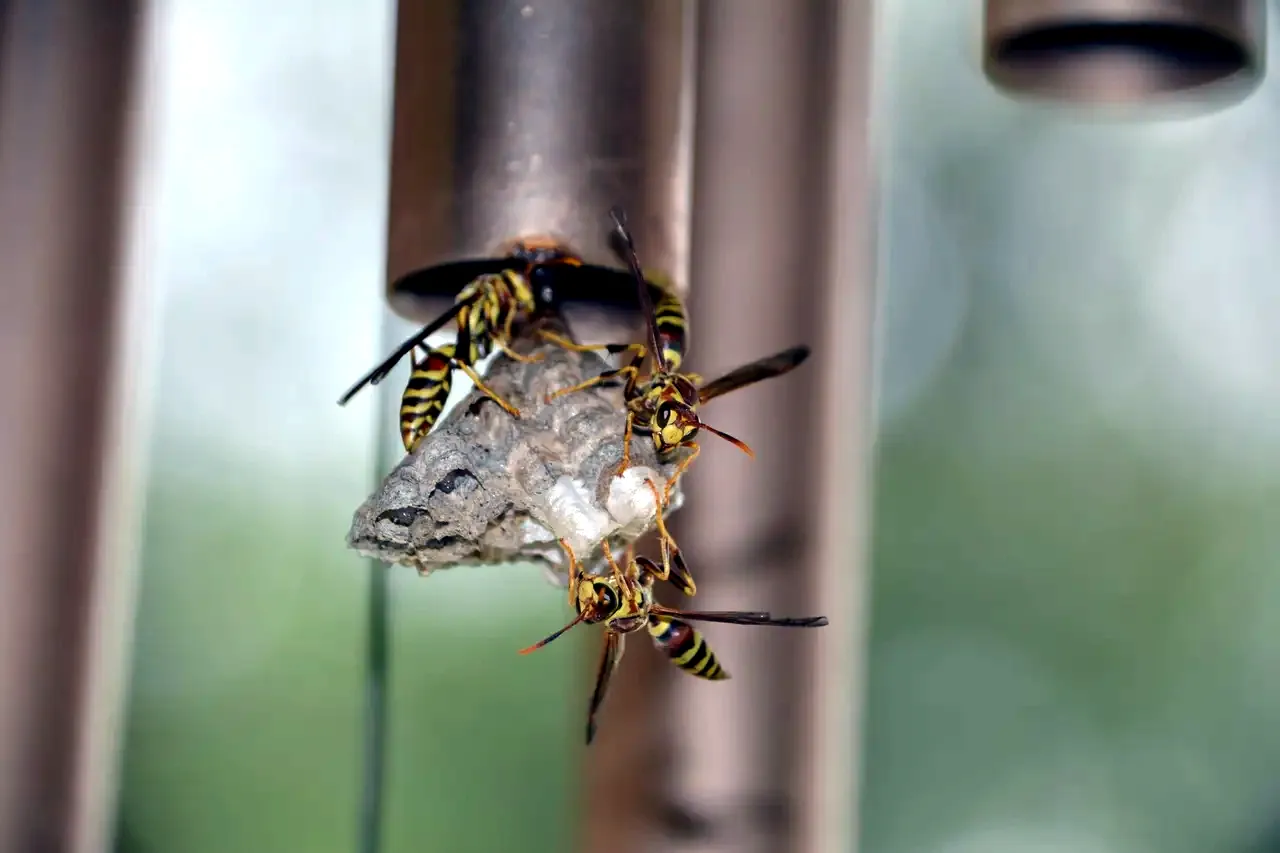
Wasps have built a small comb over the porch light of a home in Old Town, and the owner wonders whether to knock it down with a broom. Leaving it alone and taking a photo from a few yards back is a sensible start. An independent provider can describe the visit; no outcome is promised before the nest is seen.
A landlord in Oakbrook on the Lake hears about yellowjackets at a hole by the driveway. A provider usually confirms the insect, treats the nest and explains how long to keep the area clear. The owner should set up access with the tenant and note what was done and when.
A parent of two toddlers in Tanglewood spots paper wasps building under the top bar of the backyard play set. A provider usually explains how the nest will be treated, how long to keep the toddlers away and whether other play equipment should be checked. Mention any sting allergies when you call.
Wasp activity in Lewisville follows a yearly cycle. Paper wasp queens start nests in spring, yellowjacket colonies peak by late summer, and most yellowjacket nests die after the first hard frost. Here is what each season tends to bring.
Paper wasp colonies are founded in spring by queens that spent the winter in sheltered spots, often in the same general location as last year's nest. At Dallas/Fort Worth, the National Weather Service's average last freeze is March 12. New combs start small.
Summer is growth season. Paper wasp combs can reach 6 to 8 inches across, and yellowjacket colonies build toward their largest size, which AgriLife says comes by August or September. More yard time means more encounters.
Yellowjacket colonies are at their largest by August or September, and new queens and males emerge in October and November. Disturbing a ground nest in early fall is a real sting risk.
After the first hard frost, most yellowjacket nests die, and an abandoned nest is not used again. The National Weather Service's average first freeze at Dallas/Fort Worth is November 22. Paper wasp queens wait out winter in sheltered spots.
The referral line also takes calls from outside Old Town: ZIP 75067, including Vista Ridge Estates, Timberbrook and Valley Oaks, and the Lewisville part of 75077, which includes The Highlands and Lewisville Valley. Every one of those calls lands with an independent provider working in Lewisville. Keep your ZIP handy, along with the nearest subdivision name.
A few direct questions before booking tell you who holds the license, how the nest will be handled and what proof you get that the colony is gone. Any provider should be able to answer them plainly and without fuss.
Wasp nest work often means pesticides, ladders and close contact with a colony. In Texas, TDA's Structural Pest Control Service licenses businesses, certified applicators and technicians. Check the provider on TDA's current-license list and ask for proof of insurance before work begins.
Open combs, ground nests, wall voids and large hornet nests each call for a different approach. Ask the provider to explain how they will treat yours, when they plan to do it and whether the nest will be taken down afterward.
Ground and wall nests can need a second look, and paper wasps often rebuild in the same general area the next spring. Ask whether a return visit is included, when it happens and what follows if wasps are still active.
A nest can look quiet while wasps are still inside. Ask how the provider checks for activity at the entrance, when the nest can be removed and when a wall or ground opening can be closed.
Talking with past customers who had a similar nest, such as a wall colony or a hornet nest in a tree, tells you a lot. Look at independent reviews on your own as well; this site recommends no provider.
Texas A&M AgriLife Extension
Check the provider first
Ask before booking
Read the source
Beekeeper list
It depends on the insect, the nest's size and how hard it is to reach. A small paper wasp comb at eye level can be a short visit; a wall void or a high hornet nest takes longer and may need a return check. Many providers prefer early morning or evening, when most of the colony is home. The provider can estimate the time once the nest is described.
Watch from a safe distance for wasps flying in and out of one spot: an eave corner, a gap in siding, a shed roof or a small hole in the lawn. Do not walk up to the nest to identify it; a photo taken from far back is enough for the provider. Stay clear of the flight path, keep pets indoors, then phone the line.
There is no fixed month. Texas A&M AgriLife says yellowjacket colonies reach their largest size by August or September, and most yellowjacket nests die after the first hard frost; at Dallas/Fort Worth, the average first freeze is November 22. Paper wasp queens wait out winter in sheltered spots and start new nests in spring, often near the old one.
Usually you do not need to leave, but stay indoors with windows and doors closed while the provider works, and keep pets in, since disturbed wasps can fly widely. The provider will say how long to keep people and pets away from the treated spot afterward. Mention anyone with a sting allergy before the visit so the provider can plan around them.
No figures are given here. The provider sets the cost after seeing the nest, based on the insect, the size of the colony, how high or hidden the nest is and whether a return visit is needed. Ask the provider to explain each factor.
Have a question this page does not answer? Call the referral line and a local provider can explain the options.
Ask a providerDial the number above and a call-tracking service puts you through to an independent provider that works in Lewisville; the call may be recorded. Calls are connected 6 a.m. to midnight Central Time (7 a.m. to 1 a.m. during daylight saving time). Timing and cost are agreed between you and the provider.