One number to call
Paper wasps, hornets or yellow jackets: same line.
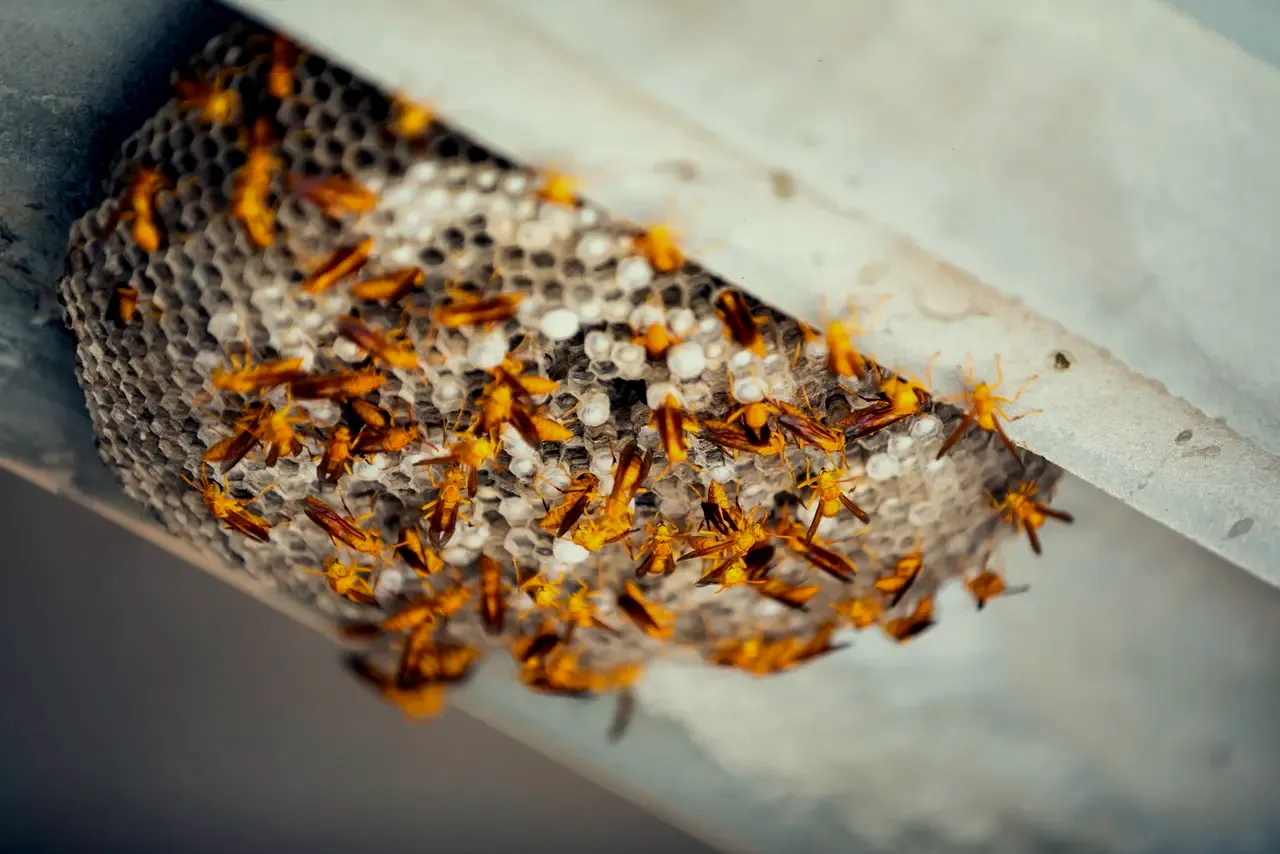
Wasp nest removal in Vista Ridge Estates starts with knowing which insect you have and exactly where it is nesting. Vista Ridge Estates is a registered Lewisville neighborhood and a recorded subdivision in ZIP 75067, and calls from its streets are passed to an independent local provider. A provider usually begins by identifying the insect from a distance: paper wasp, yellowjacket or baldfaced hornet (honey bees go to a beekeeper instead), then explains how the nest will be treated and taken down. Before you book, ask what the visit involves, when it will happen and whether a return check is included.
Paper wasps, hornets or yellow jackets: same line.
The provider confirms what is nesting before treating.
Routed to a provider that works in your ZIP code.
Look the company up on TDA’s license list.
Wasp nest removal in Vista Ridge Estates works when the plan fits the actual nest rather than a quick spray from the driveway. Vista Ridge Estates appears on the City of Lewisville's list of registered neighborhoods and on the city's map of residential subdivisions, inside ZIP 75067, where 93.4 percent of the ZIP lies within city limits. Lewisville's housing is fairly young, with a median year built of 1997 and 23.1 percent of units dating from 2010 or later, and 53.7 percent of occupied homes are rented. A provider may handle a comb on an owner's eave one day and a nest over a rented home's balcony the next, and the wasps treat both alike. Paper wasps favor eaves, garages, sheds and shrubbery. Yellowjackets mostly nest underground but can move into walls, and baldfaced hornets hang enclosed paper nests in trees and shrubs. A provider generally confirms the insect, finds every entrance and checks nearby rooflines, because a second nest is easy to miss. Ask how the result will be confirmed.

Nests in Vista Ridge Estates need different handling depending on the insect and the spot. A paper wasp comb under an eave may be treated and taken down in one visit, while a yellowjacket colony in a wall void may need treatment at the entrance and a return check before the hole is closed. The five services below cover what Lewisville providers commonly handle, and whoever takes your call should pick the approach based on the insect, the spot and the size of the colony. If you think a hornet nest is hanging in one of your trees, the hornet card is the one to read first.
In Vista Ridge Estates, a provider generally starts by identifying the insect: paper wasp, yellowjacket, baldfaced hornet, mud dauber or honey bee. Then come the nest's location, size and entrances, whether it is under eaves, in a shed, in shrubs, in the ground or inside a wall. Honey bees are not handled through this line; they go to a beekeeper on the Texas Apiary Inspection Service list. Ask for a short written note of the findings and the plan.
View service →02The baldfaced hornet is the only hornet known in Texas, and the Texas Apiary Inspection Service says it is actually a yellowjacket. Its large, enclosed paper nest hangs from trees, shrubs or eaves, often well off the ground. AgriLife entomologist Wizzie Brown says established hornet and yellowjacket colonies should be handled by professionals. Ask the provider how a high nest will be reached, when it will be treated and when it can be taken down, and keep the household away from the tree in the meantime.
View service →03Yellowjackets mostly nest underground, in lawns, beds and banks, but they also build aerial nests and move into wall voids. The provider usually treats the colony at its entrance and checks it again before removal. Texas A&M AgriLife says a wall-void entrance generally should not be sealed until the colony has been eliminated. Find out what goes into the nest and how long the household should keep away.
View service →04A nest at an apartment, rental or HOA property in Lewisville usually involves more than the tenant who spotted it. Shared housing is common here: five-plus-unit buildings hold 40.0 percent of the city's housing units, and renters occupy 53.7 percent of its homes. Tenants report the nest to the manager, and the manager arranges access to balconies, breezeways and rooflines. A provider may also check the eaves of neighboring units. Ask who needs to be present and how residents will be told.
View service →05A return visit checks whether the colony is gone and whether wasps are starting over. Texas A&M AgriLife says paper wasp queens often found new colonies in the same general location as last season's nest. On that visit, a provider generally rechecks the treated spot and nearby eaves, sheds and garages. Ask when the visit happens, whether it is included and what written record you will get afterward.
View service →In Vista Ridge Estates, a wasp nest visit usually begins with a few questions on the phone: what the insect looks like, where the nest is, how high it sits and whether anyone at home is allergic to stings. On site, the provider confirms the insect from a safe distance and looks for every entrance, since a yellowjacket colony in a wall may use more than one gap. Many providers prefer early morning or evening, when most of the colony is home, but the provider sets the time. A comb under an eave is often treated and then taken down once it is inactive. A ground or wall nest is usually treated at the entrance and checked later, and the opening stays unsealed until the colony is dead. Keep children and pets inside and close nearby windows during the visit. In Texas, pest control businesses, certified applicators and technicians are licensed by the Texas Department of Agriculture, which publishes current-license lists. Get a written record of each product, the spot it went and the date, and file it with your house papers.
Where homes share a roofline or a breezeway, a nest above one door is close to several. Nearly half of Lewisville's housing units (45.9 percent) are in buildings that hold two or more, so shared eaves and walkways are common. Treating the one comb that was reported can leave a second nest a few feet away on the same eave. Ask whether nearby eaves will be checked, who arranges access for the whole building and what happens if wasps show up next door later in the season.
Underground colonies are the usual yellowjacket pattern, according to the Texas Apiary Inspection Service, which lists gardens and embankments as common sites. The entrance is often a single small opening, and it tends to be found by accident with a mower, a trimmer or a child running across the yard. The same source notes that yellowjackets are hairless and do not carry pollen, which helps rule out honey bees. Flag the hole from a distance and keep people and pets away. AgriLife advises leaving established colonies to professionals, so ask a provider to treat it and to check the rest of the yard.
Paper wasps do not only build under eaves. The Texas Apiary Inspection Service says they also nest in garages, sheds and shrubbery, and a comb can grow to 6 to 8 inches across. A nest behind stored boxes, inside a shed door frame or deep in a hedge is easy to bump into without warning. A provider may ask you to clear a path to the nest or to hold off on yard work until it is treated. Ask what to move, and what to leave alone, before the visit.
Anyone applying pesticides to a wasp nest in Vista Ridge Estates should hold the right Texas license. TDA publishes current-license lists for businesses, applicators and technicians. Note the license number in your records.
Ask the provider to name what will be applied near doors, play areas, pools and vegetable gardens before the visit starts, and how long to keep people and pets clear afterward.
Honey bee work is not offered through this line. The Texas Apiary Inspection Service lists registered beekeepers who remove bees, and the city's wildlife page points residents to a local beekeeper. Do not spray chemicals into a hive.
The nests reported from Vista Ridge Estates are the ones found all over Lewisville. Eaves, ground nests, wall voids and nests on shared buildings come up again and again. Paper wasps start in spring, yellowjackets peak by August or September, and most yellowjacket nests die after the first hard frost. The four cards below take each common problem in turn and list what to ask the provider about it.
Paper wasp colonies are founded each spring by queens that spent the winter in a sheltered spot, and Texas A&M AgriLife notes they often build in the same general location as the previous season's nest. That is why one eave, porch ceiling or shed corner can host a nest year after year. Knocking down a comb while wasps are on it puts the colony in the air. A provider generally treats the active nest, removes it once it is inactive and checks the surrounding roofline for others. Ask whether a spring check is worth booking and which spots to watch, so a new comb is caught while it is still small and easy to reach.
Over-the-counter sprays rarely get to a colony inside a wall or deep in the ground, and spraying at close range can bring a crowd of angry wasps. Plugging the hole is another common mistake: Texas A&M AgriLife says a wall-void entrance generally should not be sealed until the colony has been eliminated, since trapped wasps can look for a way out, including into the house. AgriLife's fact sheet also says that if you have any doubt about your ability to safely control a wasp nest, call a professional. A provider usually starts by finding every entrance, then treats the colony and decides when the nest can be removed or the opening closed. Ask how they will confirm the colony is dead and what to avoid in the meantime.
Baldfaced hornets, which the Texas Apiary Inspection Service says are actually yellowjackets, build large, enclosed gray paper nests in trees, shrubs and sometimes under eaves. Many people notice one only when they start trimming a branch close to it. Do not prune near, throw things at or spray a hornet nest; a disturbed colony can sting many times. AgriLife says established hornet colonies should be handled by professionals. A provider can tell you how a high nest will be reached and whether it can be taken down once the colony is dead. Until then, keep children and pets away from that part of the yard, and warn anyone mowing or trimming nearby.
In Lewisville, 53.7 percent of occupied homes are rented, so many nests turn up on property the person who spots them does not own. This site found no Lewisville permit for wasp nest removal, offers no legal advice and takes no view on who is responsible. Even so, it helps to settle early who makes the call. A tenant can start by messaging the landlord or manager, attaching a photo shot from well back and naming the exact spot. Managers and HOAs usually arrange access to balconies, breezeways and rooflines. Ask the provider for a written note listing the insect, the nest location, what was applied and the date, plus license details, and share it with everyone involved.
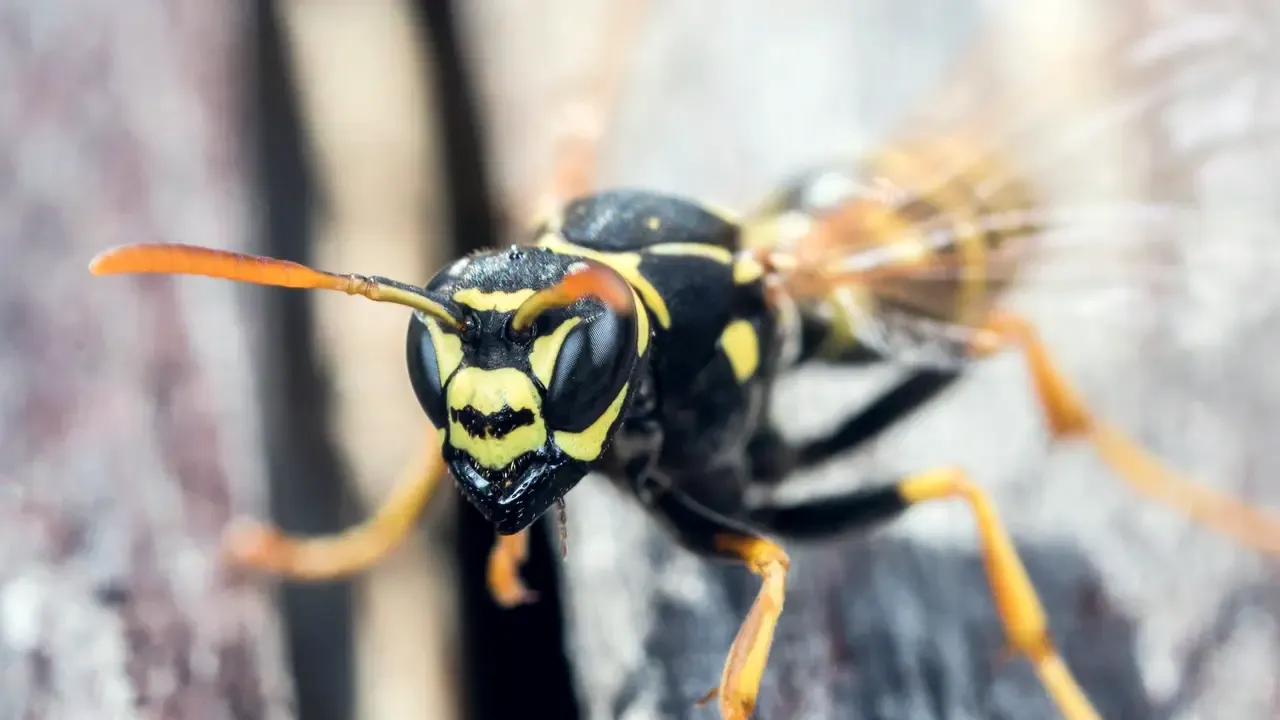
The provider sets the cost of wasp nest removal in Vista Ridge Estates after seeing the nest, and this site quotes no figures. The factors are fairly predictable: which insect it is, how big the colony has grown, how high or hidden the nest is, and whether more than one nest is on the property. A yellowjacket colony in a wall may need a return check before the entrance is closed, and a hornet nest high in a tree may need extra equipment. Find out what the quote covers, such as taking down the nest, a return visit and checks of nearby eaves, and for how many days it holds. Mention on the call if the nest is by a door, pool or play area, or if anyone at home has a sting allergy, so the provider can weigh how soon to come out.
A single small comb takes less time than a mature colony or several nests around one house. Providers usually count the active nests and size up each one during the visit. Ask how the number and size of nests shape the plan.
Nests tucked behind stored items in a garage or shed, or deep inside a hedge, take longer to reach safely. A provider may ask you to clear a path first. That affects the time on site and may change the plan or the cost.
A nest at a second-story eave, on a high branch or inside a wall void needs more equipment and time than one at eye level. Wall nests may also need a return check before the entrance is closed. Ask the provider how height and access change the visit and the overall plan.
No crews are sent from this site, so there are no landmarks to steer by. The cards below collect the facts that matter for a wasp call from Vista Ridge Estates: the ZIP, nearby registered neighborhoods, citywide housing figures, licensing, honey bee referrals and freeze dates. Lead with your full street address, and mention pets, locked gates or anyone in the home with a sting allergy. If the nest is high, say roughly how high, and whether it hangs from a tree, an eave or a fence.
Vista Ridge Estates uses ZIP 75067. The 2020 Census ZIP check puts 93.4 percent of 75067 inside Lewisville, so a few addresses with this ZIP are outside the city; say your street address first.
Lewisville's occupied homes are 53.7 percent rented. Renters should tell the landlord or manager about a nest in writing; owners can call the line directly.
Of Lewisville's housing units, 23.1 percent were built in 2010 or later and only 2.5 percent before 1960. Newer homes still have eaves and vents that wasps use.
Southridge is a registered neighborhood in ZIP 75067, like Vista Ridge Estates. Calls from Southridge addresses go through this same referral line during the same hours.
Highpoint Oaks Estates is another registered 75067 neighborhood inside Lewisville. Name the neighborhood when you call so the provider can place your home.
TDA's Structural Pest Control Service licenses pest control businesses, certified applicators and technicians, and it publishes current-license lists. Check the provider there before work begins, and keep the license number with your records.
Honey bees are not handled through this line. The Texas Apiary Inspection Service lists registered beekeepers who remove bees, and the city also points residents to one.
At Dallas/Fort Worth, the National Weather Service's average first freeze is November 22 and the average last freeze is March 12 (1991 to 2020). These are DFW figures, not Lewisville readings.
Vista Ridge Estates is on the city's registered neighborhoods list and its residential subdivision map, in ZIP 75067. Calls from its homes go through this line to an independent local provider.
Calls are connected for addresses in Vista Ridge Estates and across 75067, including Timberbrook, Water Oak Estates, Valley Oaks, Southridge and Highpoint Oaks Estates, plus 75057 and the Lewisville part of 75077. Lewisville's median home was built in 1997, with 14.3 percent built before 1980 and 23.1 percent since 2010. Tell the provider where the nest is and how high it sits; that detail helps them bring the right ladder and gear.
Vista Ridge Estates is a registered neighborhood in ZIP 75067, inside Lewisville. On any house here, paper wasps tend to start on eaves and door frames, while yellowjackets favor lawns and flower beds. A provider generally identifies the insect, finds the nest and its entrances, then treats it and removes it once it is inactive where it can be reached. The line puts each call through to an independent provider during line hours, and that provider picks the day of the visit.
Timberbrook is a registered neighborhood in ZIP 75067, the same ZIP as Vista Ridge Estates. Yards with shrubs and sheds give paper wasps more places to build than the eaves alone, and the Texas Apiary Inspection Service lists garages, sheds and shrubbery among their nest sites. Timberbrook households reach an independent company through the same number. Give your street address and describe where the wasps are flying.
Water Oak Estates is a registered neighborhood in ZIP 75067. Ground-nesting yellowjackets can show up in any lawn or flower bed, and people often find them with the mower in late summer, when colonies are at their largest. A look over the whole yard before treatment is sensible, since there may be more than one entrance. The same number serves Water Oak Estates, and the visit date is the provider's to set.
Valley Oaks is a registered Lewisville neighborhood in ZIP 75067. Nests here are handled the same way as anywhere in the city: identify the insect from a distance, find the nest and every entrance, treat it, then remove it or check it again. Renters should report a nest to the landlord or manager first. The same number and the same questions about timing, return visits and licensing apply.
Below are three invented but typical cases drawn from the kinds of calls Lewisville households make. None is a record of a real job or a result this site can claim. Each starts with what looks like a small nest and shows what to talk through with a provider.
An owner who rents out a house in Vista Ridge Estates hears from the tenant that wasps are flying in and out of a gap under the eave above the garage, and there is a faint buzzing in the garage ceiling. The tenant already tried a store-bought spray without luck. In a case like this, a provider usually confirms the insect, looks for every entrance and treats the colony through the gap. Texas A&M AgriLife advises against sealing a wall-void entrance until the colony has been eliminated, so the gap may stay open until a return check. The owner should arrange access with the tenant, ask for a written note listing the insect, the products used and the dates, and keep it with the lease file.
A household in Water Oak Estates, ZIP 75067, has a baby at home and finds yellowjackets streaming from a hole beside the patio in late August. Texas A&M AgriLife says yellowjacket colonies reach their largest size by August or September, so a nest found then may be big. The parents want to know how to keep the baby safe and what will be used near the patio. A provider may treat the ground nest at the entrance, advise keeping the patio off-limits until activity stops and check the rest of the yard for other entrances. Useful questions: what goes into the ground, how long the patio stays closed and whether anyone comes back to check. If anyone is stung and has trouble breathing or swelling of the face or throat, call 911 right away.
A landlord is getting a Valley Oaks rental ready for the next tenant, due in about ten days, and finds paper wasp combs under the back eave and inside the shed. Spring is when paper wasp queens start new colonies, often in the same general spot as the year before, so last year's nest sites are worth checking too. A provider in this case generally walks the eaves, shed and fence, treats the active combs and removes them once they are inactive. Worth asking: can it be wrapped up before move-in, what does the new tenant need to know, and when is any return check? A written record of the visit helps if questions come up later in the lease.
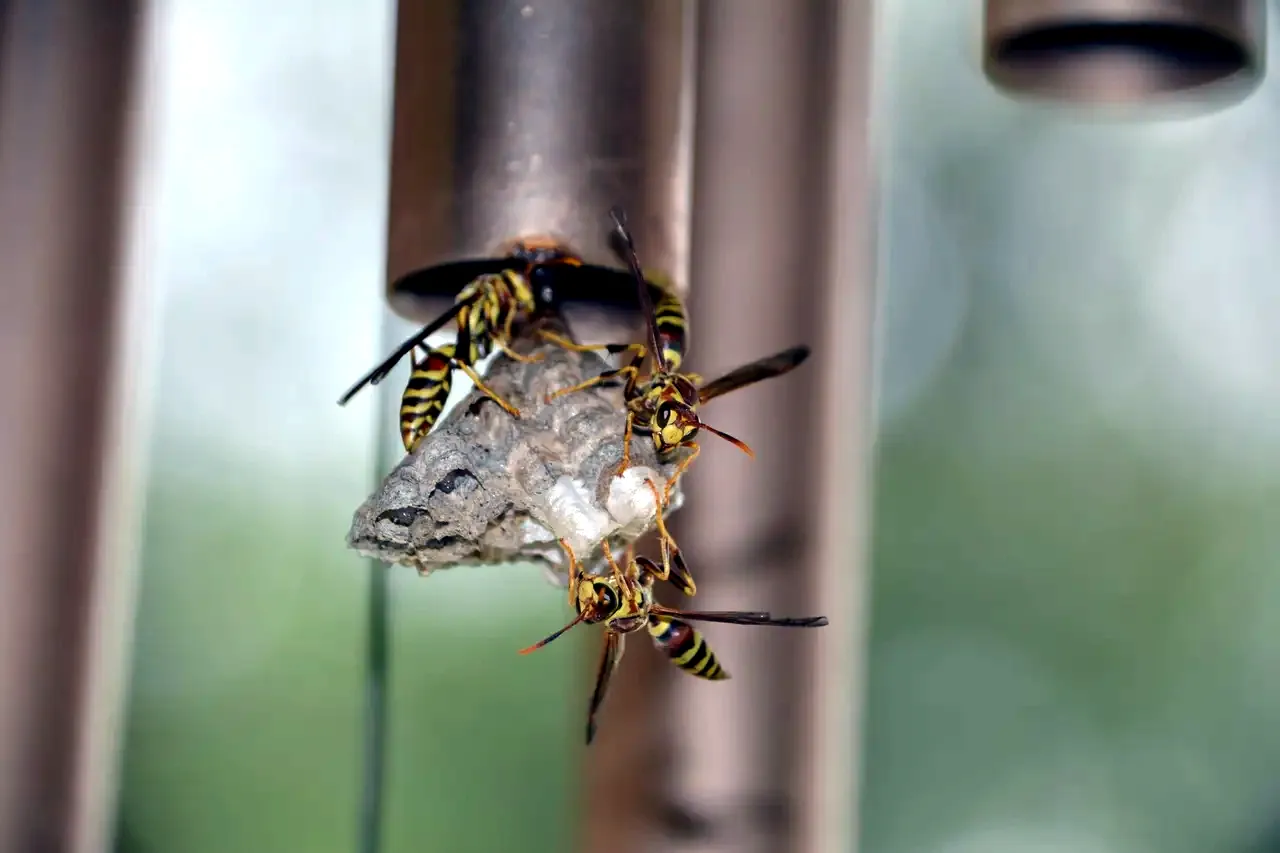
A landlord with a rented house in Vista Ridge Estates: the tenant reports wasps nesting in the eave over the side gate, and the first company knocked the comb down without treating it. A caller in this position can expect the provider to ask about the insect, check nearby eaves and explain whether a return visit is planned. Before anyone looks at the nest, no result can be promised.
A homeowner in Water Oak Estates with a young family had a paper wasp nest removed last summer and now, in spring, sees wasps starting a new comb a few feet from the old spot. That fits AgriLife's note that paper wasp queens often rebuild in the same general location. The caller can ask a provider about treating the new comb while it is small and which nearby eaves to watch.
A renter in Valley Oaks: yellowjackets are flying in and out of a gap by the balcony door, and the manager has not replied. The tenant can be connected with a provider to talk through the nest, but work on a rented building usually needs the manager's approval. Keep reporting in writing, with photos taken from a distance.
Wasps in Vista Ridge Estates follow a yearly rhythm. Paper wasp queens start colonies in spring, yellowjacket colonies peak by August or September, new queens and males emerge in October and November, and most yellowjacket nests die after the first hard frost. Dallas/Fort Worth freeze dates give a rough guide to when that frost tends to arrive. Season by season, here is what to watch and when to call.
As the weather warms after the Dallas/Fort Worth average last freeze of March 12, paper wasp queens that spent the winter in sheltered spots begin building, often near where last year's nest hung. New combs start small and easy to overlook under eaves and in sheds.
Through summer, paper wasp combs grow (they can reach 6 to 8 inches across) and yellowjacket colonies keep building. Ground nests get busier just as more people are out in the yard mowing, gardening and playing, so stings from a nest nobody knew about become more likely.
Texas A&M AgriLife says yellowjacket colonies reach maximum size by August or September, and new queens and males emerge in October and November. Fall yard work and raking can turn up large ground nests, and a disturbed colony at full size can sting many times.
After the first hard frost, most yellowjacket nests die and are not reused. The Dallas/Fort Worth average first freeze is November 22. Paper wasp queens overwinter in sheltered spots and start new colonies in spring, so the quiet months do not mean the wasps are gone for good.
Beyond Vista Ridge Estates, the line takes calls from all of 75067 and 75057 and from the Lewisville part of 75077. That runs from Timberbrook, Valley Oaks and Southridge to Old Town, Tanglewood and The Highlands. If you look after homes in several of these places, list them all during one call; each address is passed to an independent local provider.
A wall colony or a hornet nest high in a tree is a different job from a small comb by the door, and not every company handles both well. Five questions, asked before you agree to anything, show how the provider plans to deal with your nest and what you will have in writing afterward. If the answers stay vague, keep asking until they are clear.
The Texas Department of Agriculture's Structural Pest Control Service licenses businesses, certified applicators and technicians and publishes current-license lists. Check the provider there before work begins, ask who will apply the products, and keep a copy of the license details.
A second comb on the next eave or a ground nest across the yard is easy to miss. A provider who walks the roofline and yard knows how wasps settle. If only the reported nest will be treated, ask how other nests will be ruled out.
Ask this before the visit is set. A provider who names the products and explains where they will go near doors, gardens and play areas is paying attention. If the answer stays fuzzy, hold off on booking.
A colony treated through a wall gap may need a recheck before the gap is closed, and paper wasps often rebuild nearby the next spring. Is the recheck part of the plan or an extra charge? Ask that, plus how soon it comes and what the provider does if wasps are still flying.
Landlords, tenants, managers and future buyers may later ask who treated a nest and how. A written note with the insect, the nest location, products, dates and any return-visit findings keeps everyone working from the same record. Before booking, ask for an example and check that it shows the license.
Check the provider first
Texas A&M AgriLife Extension
Ask before booking
Read the source
Read the source
That depends on the insect, where the nest is and how many nests there are. Treating one small paper wasp comb at eye level can be quick, while a wall-void colony or a high hornet nest takes longer and may need a return check before the nest is removed or the entrance closed. Many providers prefer early morning or evening, when most of the colony is home. Ask the provider for your own timeline.
Yellowjackets and other wasps look smooth and shiny; the Texas Apiary Inspection Service notes yellowjackets are hairless and do not carry pollen. Honey bees are fuzzy and build wax comb, and they go to a registered beekeeper on the TAIS list, not to this line. If you are unsure, watch from a distance and describe what you see when you call.
No figures are published here, because the provider sets the cost after seeing the nest. You can help them gauge the job on the phone: say which insect you think it is, where the nest hangs or opens, how high it sits, roughly how big it looks and whether there is more than one. Ask what the quote includes, such as removal of the nest and any return check.
Usually yes, for a while. Keep doors and windows shut and pets in while the provider works, since disturbed wasps can scatter. The provider sets how long to stay off the treated spot afterward. Mention any sting allergy beforehand, and plan children's outdoor time around the visit and the hours after it.
In some cases. Most yellowjacket nests die after the first hard frost and are not reused, but paper wasp queens often start new colonies in the same general location the next spring. A colony that was only partly treated can also stay active. Ask how a return check confirms the result and which spots to watch.
Have a question this page does not answer? Call the referral line and a local provider can explain the options.
Ask a providerDial the number above and a call-tracking service puts you through to an independent provider that works in Lewisville; the call may be recorded. Calls are connected 6 a.m. to midnight Central Time (7 a.m. to 1 a.m. during daylight saving time). Timing and cost are agreed between you and the provider.